

What is EMDR?

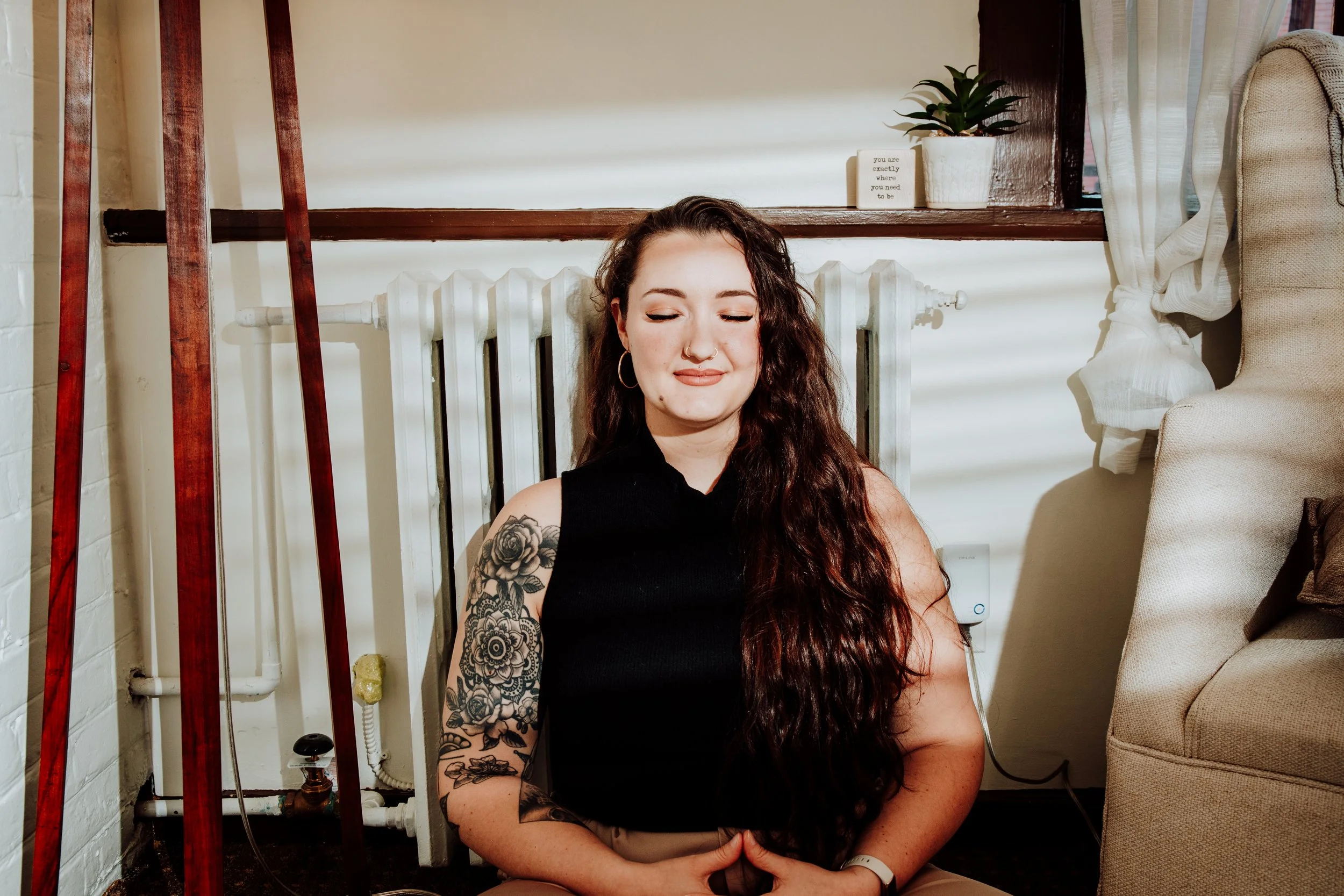
EMDR is a type of therapy that can be helpful in processing trauma as well as difficult life experiences. EMDR stands for Eye Movement Desensitization and Reprocessing, and has been shown effective in treating PTSD, complex trauma, anxiety, depression, phobias, and other emotional challenges.
How Does EMDR Work?
INFO GETS STUCK
Your brain is usually great at processing life experiences. But after something overwhelming or traumatic, the related thoughts, emotions, images, or body sensations can get “stuck,” making it hard for your nervous system to store them the way it normally would.
1
THIS CAN CAUSE DISTRESS
When unprocessed, these experiences can show up later as anxiety, mood shifts, or symptoms of PTSD—your brain still treating the memory like it's happening now, not something that’s over.
2
EMDR GETS THINGS MOVING AGAIN
EMDR uses bilateral stimulation (like guided eye movements or tapping) to help your brain and body reprocess those experiences. It doesn’t erase the memory—it helps store it properly, so it no longer overwhelms you.
3
READY TO CHAT?
Even if you aren’t quite sure if EMDR is right for you, the best way to move forward is to book a free consultation and we can chat through your options together to find the best path forward together.

What should I expect?
EMDR therapy follows 8 phases, each serving a specific purpose in helping you process and heal. While the process is structured, it’s also flexible—we may move back and forth between phases depending on what’s most supportive for you.
Here’s what you can expect in working together:
We go at the pace that feels right for you
We talk as much or as little as you feel comfortable with
We prioritize supporting you to feel more accepting of your past, and more confident and in control of your present and future
We focus on building up the tools and skills that make sense to you to address where you’re struggling
We explore what key events or difficulties we want to work on
We identify the memories and experiences connected to these events
We learn skills and strategies to prepare to work on these events and memories
We reprocess these memories using bilateral stimulation, also known as dual-attention awareness
HOW LONG WILL IT TAKE?
This is a difficult question to answer, because your EMDR journey will be unique to you.
When we’re working on a single-event and are relatively stable & functioning well in other areas of our life, EMDR can be very fast an effective. However, if we have a lot of difficult experiences to process, and have experienced a lot of difficult relationships that have negatively impacted how we feel about ourselves, we can often take a longer time in the preparation & stabilization phase of EMDR, as it’s not recommended to jump into the reprocessing phase before we are adequately resourced and prepared.
That said, if you have a complex trauma history, please don’t be discouraged! EMDR can absolutely be helpful, and you and I will work together to co-create our roadmap and treatment plan, and will regularly check-in to make sure that things are feeling on track.
To learn more about EMDR, you can visit the EMDR Internation Association’s website for information and resources: https://www.emdria.org/about-emdr-therapy/
FAQS
-
Yes! I offer a free 30-min. consultation (either via phone or virtually), which I find helpful because it allows me to learn a little bit more about what you’re looking for support with. It also gives you a chance to ask me any questions you might have, as well as to determine if it feels like a good fit for us to work together prior to booking an appointment.
-
My standard rate is $145.00 per 50-minute session (prices are before GST).
I do try to be as flexible as possible so that cost is less of a barrier, especially for folks who do not have insurance coverage or are on a fixed income. In these instances, I’m sometimes able to offer a sliding-scale. This is offered on a first-come first-served basis.
Please note that currently all of my sliding-scale and pro bono spots are filled.
-
You are welcome to pay for sessions via e-transfer, debit, Visa, or Mastercard. To pay via credit card, I will need you to complete a Credit Card Authorization Form permitting us to charge the card & to securely store your card information on file.
-
Yes, I offer a mix of in-person, virtual, and phone sessions.
-
My office is located at the Birch Wellness Center in downtown Winnipeg at 34 Carlton Street.
We are located between Broadway and Assiniboine Ave.
The specific address is:
7-34 Carlton Street
Winnipeg, MB
R3C 1N9
-
There is street parking along Carlton, and there is a surface lot at Broadway between Edmonton and Carlton.
Please DO NOT park in the back lot behind the building, as this is reserved for staff. You may become boxed in, and/or have your vehicle towed.
-
What are your hours?
I offer sessions:
Mondays between 9:30am-5:00pm
Tuesdays between 11:00am-7:00pm
Wednesdays between 1:00pm-8:00pm
Thursdays between 11:00am-7:00pm
-
No, at this time I don’t keep a wait list and will refer you to other supports/therapists if my case load is full and I’m unable to see you within 2-months.
Take your pick…
EMDR is a fantastic modality for a great variety of challenges…
Are you struggling with…